FAQs
About the project
What is the Nowra CBD Safer Cities: Her Way 2 Project?
Shoalhaven City Council is partnering with the NSW Government through Transport for NSW's Safer Cities: Her Way 2 program to better understand how people experience the Stewart Place Bus Transit Precinct and surrounding laneways within the Nowra CBD.
The project aims to help improve perceptions of safety, comfort, accessibility, inclusion and activation within public spaces and the CBD transit hub, particularly for women, girls and gender-diverse people.
What is Safer Cities: Her Way?
Safer Cities: Her Way is part of the NSW Government's broader Safer Cities program. The program supports councils across NSW to work with local communities to understand lived experiences and develop initiatives that help improve perceptions of safety in public spaces and transport hub precincts, particularly for women, girls and gender-diverse people.
Feeling safe in public spaces is essential for thriving communities. When people feel confident to move freely, day and night, they are more likely to walk, cycle and connect with each other and their local area. That’s why Council is partnering with Transport for NSW on the Safer Cities: Her Way 2 Program.
What area is included in the project?
The project focuses on the Stewart Place Bus Transit Precinct and surrounding laneways within the Nowra CBD. Please refer to the full map of the Safer Cities Her Way 2: Nowra CBD focus area on the project page.
What does "perceptions of safety" mean?
Perceptions of safety refer to how safe and comfortable people feel when moving through and spending time in public places.
The project is focused on understanding people's experiences, behaviours and perceptions, and how public spaces can feel more welcoming, inclusive and comfortable to use.
Who is funding the project?
This project is proudly funded by the NSW Government through Transport for NSW's Safer Cities: Her Way program to help improve perceptions of safety in public spaces and transport hub precincts, particularly for women, girls and gender-diverse people.
Who the project is for
- 3 out of 4 women would walk more if they felt safer in public spaces
- For 9 out of 10 women, a sense of safety shapes the routes they choose to take
- People feel safest in activated public spaces that have plenty of people around
- When women feel unsafe, they often change their day-to-day behaviours
Why is this project focused on women, girls and gender-diverse people?
Research shows that perceptions of safety can significantly influence how women, girls and gender-diverse people move through public spaces, the routes they choose, the transport options they use and the times of day they feel comfortable travelling. This may impact their access to social and economic opportunities and quality of life.
Transport’s Safer Cities Survey Report 2023 found:
By understanding these experiences, councils can help create more welcoming, inclusive and vibrant places that benefit everyone. Safer spaces for women, girls and gender diverse people mean more welcoming and thriving communities for all.
Is the project only for women, girls and gender-diverse people?
No.
While the project focuses on understanding the experiences of women, girls and gender-diverse people, improvements that support a stronger sense of safety, accessibility and overall comfort can create better public spaces for everyone.
Can anyone participate?
There will be opportunities for a broad range of community members to contribute during the project.
Some activities may involve targeted participation to ensure that the project captures the lived experiences of key groups, including women, girls and gender-diverse people.
Why are you interested in hearing from people who avoid the area?
Understanding why people choose not to use certain streets, spaces, routes or transport options is just as important as understanding the experiences of current users.
These perspectives help identify barriers and opportunities that may not otherwise be visible.
How the community will be involved
How will the community be involved?
Community members will have opportunities to share their experiences, ideas and perspectives throughout the project.
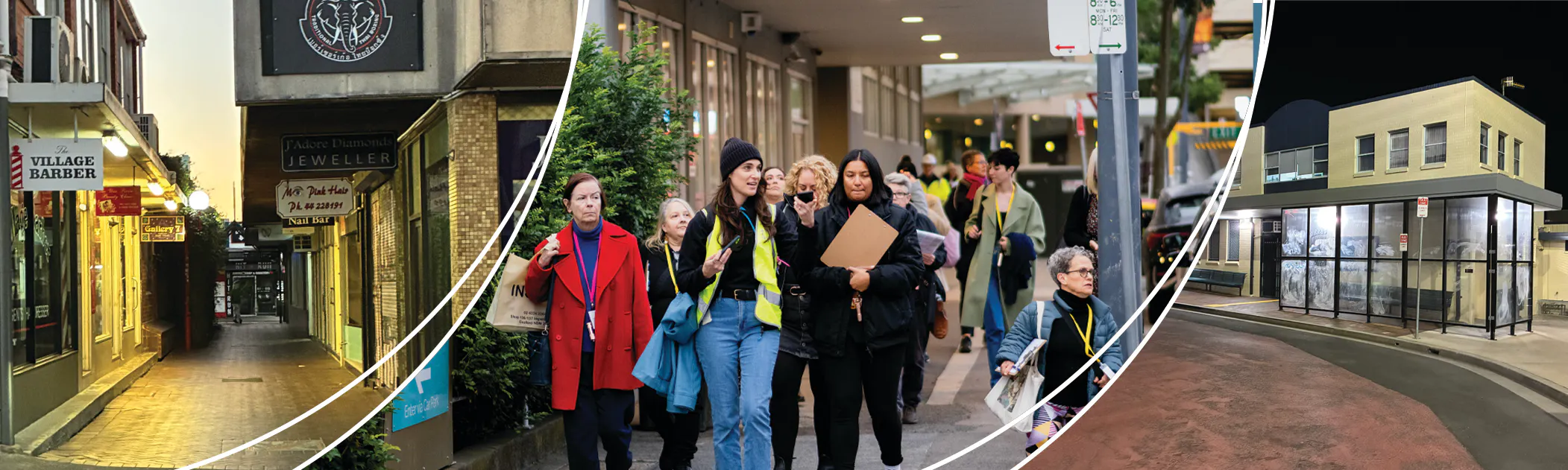
Activities will include surveys, co-design workshops, day and night walkshops and other engagement opportunities designed to help us better understand how people experience the area and identify opportunities for improvement.
What is a walkshop?
A walkshop is a place-based walking workshop where participants move through a public space together, observe the environment and discuss what is working well and what could be improved.
Walkshops help capture real-world experiences and local knowledge directly within the project area.
What is co-design?
Co-design is a collaborative process that involves community members helping to identify issues, explore ideas and contribute to potential solutions.
Rather than designing for the community, co-design involves working with community members and recognising their lived experience as valuable expertise.
From ideas to improvements
Will all ideas suggested by the community be delivered?
Not necessarily.
Community feedback will play an important role in helping Council understand local experiences and identify opportunities. Suggestions will be considered alongside project objectives, site constraints, funding requirements, feasibility and future implementation opportunities.
Will there be physical improvements delivered as part of the project?
The project will explore opportunities and potential initiatives informed by community engagement and co-design.
Any future improvements will be subject to project outcomes, available funding, approvals and feasibility considerations.
More information and updates
How can I stay informed?
Subscribe to this project page to receive updates about project milestones, engagement opportunities, project findings and future announcements.
Where can I find out more about the Safer Cities: Her Way program?
Visit the Transport for NSW website for more information about the Safer Cities program by clicking here.